

Dec 15, 2025
Top Donor Engagement Strategies for Faith-Based Groups
Donor engagement is more than asking for contributions - it's about building lasting relationships rooted in shared faith and mission. Here's how faith-based groups can connect with supporters on a deeper level and boost donor loyalty:
- Personalized Thank-You Notes: Handwritten notes with personal details and spiritual encouragement show genuine appreciation.
- Exclusive Donor Events: Small gatherings like appreciation dinners or ministry tours create meaningful connections.
- Targeted Communication: Segment donors by interests or giving history to send relevant, tailored updates.
- Listening to Feedback: Actively seek and respond to donor input to strengthen trust and align with their values.
- Faith-Aligned Fundraising: Frame giving as a spiritual act tied to your mission, using stories and outcomes to inspire.
- Permission-Based Outreach: Respect donor preferences on communication frequency and channels.
- Storytelling: Share real-life examples of how donations impact lives to deepen emotional connections.
- Recurring Giving Programs: Offer monthly giving options, making contributions simple and spiritually meaningful.
- Faith-Based Elements: Incorporate scripture, prayer, and reflections into updates for a personal touch.
- Regular Mission Updates: Share progress reports and leadership updates to maintain transparency and trust.
These strategies help turn one-time donations into ongoing partnerships, ensuring your mission thrives while strengthening your community.
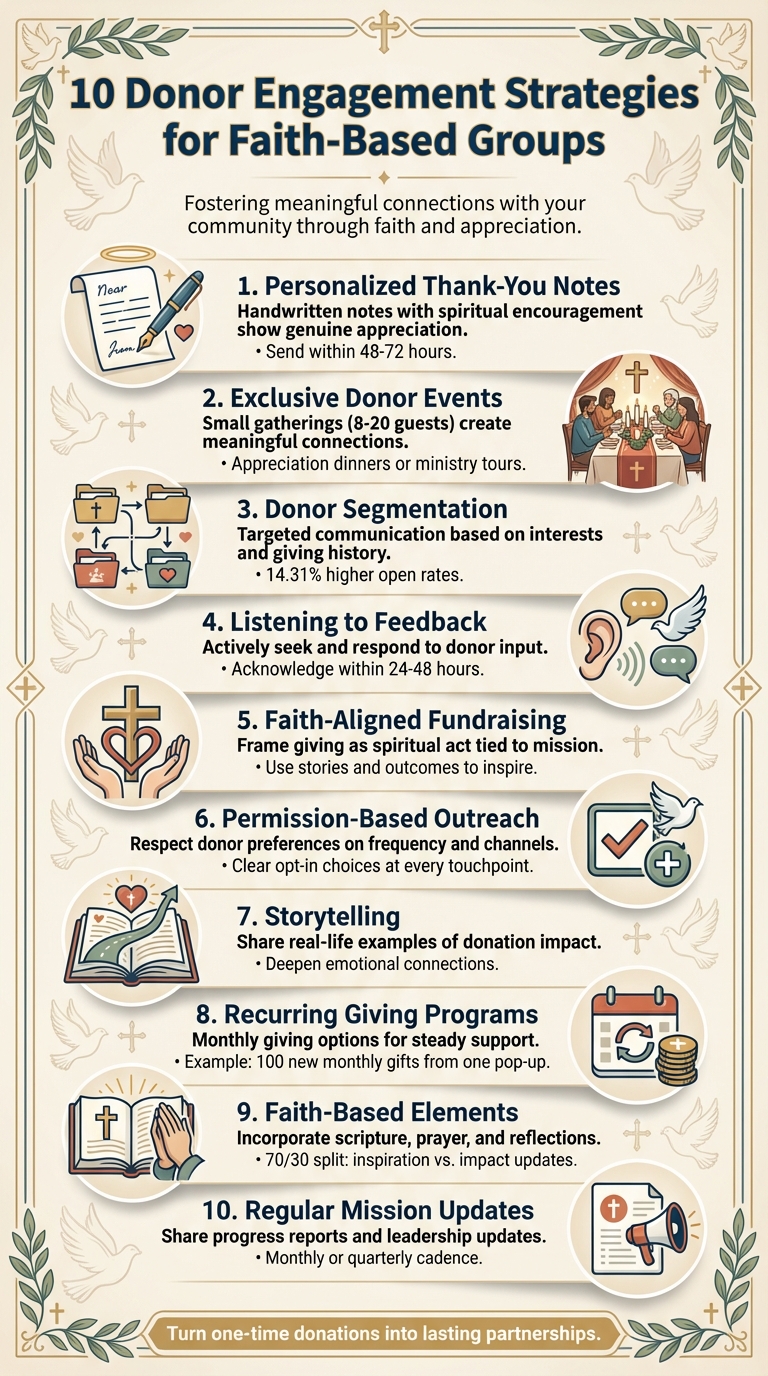
10 Donor Engagement Strategies for Faith-Based Organizations
Grow Giving With Gratitude: How to Relentlessly Build Relationships to Drive Donations
1. Personalized Thank-You Notes
There’s something special about a handwritten thank-you note - it makes donors feel genuinely appreciated and recognized as true partners in your mission. For faith-based ministries, where values like fellowship and hospitality play a central role, these notes reflect shared principles and help donors see their contributions as part of a meaningful spiritual journey.
To make these notes even more impactful, include personal details that show you’ve paid attention. Mention specifics like the gift date, the amount range, and how their generosity is making a difference - whether it’s helping families, supporting mission teams, or advancing other parts of your work. Adding a short Scripture, blessing, or spiritual encouragement that aligns with your faith tradition can make the note even more heartfelt and aligned with what donors expect.
Since writing personalized notes can take time, it’s a good idea to set clear guidelines. For example, reserve handwritten notes for first-time donors, gifts over $250, or monthly contributors. Hosting “gratitude nights” with volunteers or leaders can help manage the workload while fostering a sense of community. Make sure notes are sent within 48–72 hours of receiving a gift to keep the gesture timely and meaningful.
When leadership takes the time to sign or personally write these notes, it adds an extra layer of sincerity. For major donors or those who’ve supported your mission for years, a fully handwritten note from a leader can strengthen their commitment and even spark conversations about future goals and expanded support.
It’s also important to measure how these efforts are paying off. Track donor retention rates and how often recipients of handwritten notes give again. For faith-based nonprofits with annual revenues between $1 million and $20 million, organizations like Share Services can help create scalable strategies to maintain gratitude that’s both efficient and spiritually meaningful.
2. Exclusive Donor Events
Hosting small, intimate gatherings - like appreciation dinners or guided tours - provides donors with a unique opportunity to connect with ministry leaders, staff, and the tangible outcomes of your mission. These events transform the donor relationship from merely financial to deeply relational, helping donors feel like valued partners in your work rather than just contributors.
Exclusive events build on personalized expressions of gratitude by fostering closer connections. Keep these gatherings small - ideally between 8 and 20 guests - to allow for meaningful conversations with ministry leaders. For example, an appreciation dinner could feature a catered meal at your church or ministry space, include a heartfelt testimony from someone whose life has been impacted by your work, and provide time for prayer and relaxed discussions. Alternatively, a tour might guide donors through your food pantry, youth center, or mission base, giving them a firsthand look at operations, introducing them to program graduates, and showing exactly how their contributions are making a difference.
Position these events as gatherings for ministry partners, underscoring trust and shared purpose. Make it clear that their invitation stems from their role as valued and trusted supporters - not solely based on the size of their financial gifts. Begin the event with a brief prayer, a relevant Scripture passage, and a Q&A session to foster a sense of shared mission and community. These moments help solidify a donor's sense of belonging and commitment to your ministry.
After the event, follow up within 48–72 hours with a personalized note that references a specific conversation or moment from the gathering. Tracking attendance and responses to these follow-ups can help you measure the event’s impact. For faith-based nonprofits with annual revenues between $1 million and $20 million, Share Services offers support in designing scalable appreciation experiences, including digital follow-ups and messaging to sustain donor engagement year-round.
3. Donor Segmentation for Targeted Communication
Breaking your donor base into smaller, more meaningful groups - based on giving history, interests, or engagement levels - allows you to craft messages that feel personal and relevant. Instead of sending the same generic email to everyone, segmentation helps you connect with donors on a deeper level. For example, a donor passionate about your food pantry would appreciate updates specifically about hunger relief efforts. This makes them feel recognized and valued, rather than just another name on a bulk mailing list.
Start with simple distinctions: separate one-time donors from recurring ones, identify those who contribute larger amounts, and note the programs they’ve supported in the past. From there, tailor your communication to align with their preferences. Sharing targeted stories or updates with specific groups not only respects their interests but also fosters stronger, long-term relationships. This kind of thoughtful outreach ensures your messages resonate with the right people.
Here’s why this works: segmented email lists can increase open rates by up to 14.31% and double click-through rates. Faith-based organizations have seen similar results when they align their messaging with donors' spiritual passions and giving habits. This approach builds trust and reduces donor attrition over time.
For mid-sized faith-based organizations, CRM tools can make this process easier. Platforms like Share Services offer digital tools to automate donor segmentation, saving time while ensuring accuracy. These tools can help you stay efficient and focused on what matters most - building meaningful connections.
Keep your segmentation manageable by limiting it to three to five groups, and revisit these categories regularly to ensure they still make sense. Always get donor consent before sending targeted communications. Respecting their preferences reinforces the idea that your outreach is about partnership, not just transactions.
4. Listening to Donor Feedback
When donors share their thoughts and ideas, they’re offering more than just opinions - they’re giving you a deeper understanding of their values and priorities. In many faith-based communities, giving is often seen as an act of stewardship and discipleship. By listening closely to both their concerns and spiritual insights, you show donors that their discernment is just as important as their financial support. This approach shifts the relationship from a simple transaction to a shared ministry, where donors feel like true partners. And when you actively listen, you set the stage for meaningful follow-ups.
To gather feedback effectively, move beyond generic surveys. Consider adding a brief post-donation poll in email receipts with two or three focused questions about clarity or the spiritual impact of their gift. You could also schedule quarterly check-in calls to ask donors what’s on their hearts. Another idea is to form small donor advisory groups - six to ten supporters who meet a few times a year to discuss new initiatives. Even simple prompts in newsletters, like “What should we pray for?” or “What stories inspire you most?” can uncover valuable insights.
But asking for feedback is only half the equation - how you respond matters just as much. Acknowledge feedback within 24–48 hours by summarizing key points and explaining the next steps. Then, follow through by showing how their input has made a difference. For example, you might say, “Thanks to feedback like yours, we’ve added more impact stories to our emails.” These “you said, we did” moments build trust and show donors that their voices truly matter.
When donors feel heard, they’re more likely to stay engaged. Seeing their feedback lead to real changes - whether it’s in program improvements, communication style, or event planning - reinforces a sense of integrity and transparency. For mid-sized faith-based organizations, managing this process at scale can be challenging, but tools like those from Share Services make it easier. These tools help track conversations, identify recurring themes, and trigger personalized follow-ups, ensuring every donor feels recognized and valued. By weaving donor feedback into decision-making, faith-based groups not only strengthen trust but also deepen emotional connections with their supporters.
5. Aligning Fundraising with Faith Values
When you align your fundraising efforts with the core beliefs of your donors, you deepen their connection to your mission. For faith-based organizations, contributions often represent more than financial support - they’re an expression of spiritual values. Fundraising can be framed as a partnership in God’s work, where giving becomes an act of worship, stewardship, and discipleship. By reflecting biblical principles that resonate with your supporters - like caring for the poor, evangelism, or discipleship - you’re helping them feel spiritually invested in your mission, not just financially generous. This approach allows you to craft messages that align with their faith-driven priorities.
To better understand what matters most to your donors, use small group discussions or surveys. Questions like, "What kingdom work inspires you the most?" or "How are you praying God will use your resources?" can reveal their spiritual passions. Additionally, tracking donor responses to specific campaigns - such as local outreach versus global missions - can offer valuable insights into their priorities over time. These insights can then guide how you shape future appeals.
Once you’ve identified these priorities, integrate them into your messaging. Each campaign should clearly connect to a mission-driven purpose rooted in Christian values like compassion and stewardship. Use language that emphasizes giving as an act of worship and partnership in God’s work, rather than simply a response to financial needs. For instance, instead of focusing on a monetary goal like "We need $10,000 by December 31", you could say, "Help us support 50 families this winter - a tangible way to live out Christ’s call to care for those in need." Sharing stories of transformed lives, spiritual growth, and answered prayers can also demonstrate the eternal impact of their generosity.
Transparency plays a vital role in building trust. Provide clear financial summaries and regular updates that break down program versus administrative costs. Show how donations translate into real outcomes - like the number of families helped or churches supported - and connect these outcomes to your spiritual mission. When donors see that their gifts are managed with integrity as God’s resources, they’re more likely to make significant and recurring commitments.
For mid-sized faith-based organizations with annual revenues between $1 million and $20 million, scaling values-based fundraising efforts can be challenging. This is where expert support can make a difference. Share Services specializes in helping organizations craft faith-rooted messaging, donor journeys, and digital campaigns that align with donors’ spiritual identities. By grounding your appeals in shared faith commitments, you can build trust, increase recurring giving, and strengthen donor retention over the long term.
sbb-itb-deea482
6. Permission-Based Communication
Permission-based communication takes personalized outreach to the next level by giving donors the power to shape how they engage with your ministry. Instead of assuming consent, this approach prioritizes asking donors about their preferred channels, frequency, and types of content. For faith-based organizations, this isn't just about following legal guidelines - it’s about practicing the values of respect and free will that align with Christian principles.
By seeking explicit consent before sending updates, appeals, or invitations, you’re showing donors they’re partners in your ministry, not just targets for fundraising efforts. This method avoids making donors feel pressured or manipulated - common pitfalls in religious fundraising that can lead to frustration or disengagement. When donors have control over how they’re contacted, it builds trust and strengthens their connection to your mission, paving the way for a more meaningful and personalized donor experience.
How can you implement this? Start by offering clear opt-in choices at every interaction point. On donation forms, connection cards, or offering envelopes, include simple checkboxes for different communication channels, like email, text, phone, or mail. Use straightforward language such as, "I’d like to receive monthly updates via email", or, "Can we text you about upcoming events?" Break down content into categories - prayer updates, fundraising appeals, event invitations - so donors can select what aligns with their interests and spiritual goals.
Keep the dialogue open. During pastoral visits or stewardship conversations, invite donors to update their preferences and ensure their choices are recorded in your system. Always include clear options to unsubscribe in emails and texts, like "STOP to unsubscribe." This transparency not only reinforces your organization’s integrity but also shows you’re as committed to respecting their boundaries as you are to managing their financial gifts wisely.
For mid-sized ministries with annual revenues between $1 million and $20 million, managing permission-based communication across multiple channels can be complex. That’s where expert support can help. Share Services specializes in creating digital fundraising systems and donor retention strategies that respect communication preferences while keeping donors engaged. Their approach turns compliance into an opportunity to deepen relationships and align outreach with your ministry’s values.
7. Relationship Building Through Storytelling
Stories create a powerful connection between your ministry and your donors. When you share real-life examples of how donations have impacted lives - like a family in crisis receiving assistance through your church's benevolence fund, or someone overcoming addiction through your outreach program - you invite donors into a shared spiritual journey. Their generosity becomes a visible part of God's work in the world. This approach deepens personal connections and builds on earlier donor engagement efforts.
Rather than starting conversations with budget goals or fundraising targets, lead with the story of a life that was changed. For example, you could share how Maria, during her recovery, received three months of grocery support, directly linking donor contributions to tangible outcomes. This shifts the focus from financial transactions to meaningful transformations, allowing donors to see themselves as partners in your mission rather than just financial backers.
Leadership involvement can make these stories even more impactful. When pastors and ministry leaders share their own experiences with giving - explaining why they give, how it has shaped their faith, and the sacrifices they've made for the mission - it builds trust and inspires others to follow their example.
To make storytelling a consistent part of your ministry, integrate these narratives into every major communication channel: email newsletters, social media updates, donor events, and even brief moments during worship services. Authenticity and specificity are key. Include details about the people helped, the changes they experienced, and how faith played a role in their journey.
For ministries juggling multiple communication platforms, Share Services can help you craft clear, compelling stories that instantly resonate. Their expertise in brand and messaging development ensures your emails, social posts, and website consistently reflect a narrative that aligns with your mission. This kind of storytelling transforms one-time donors into long-term partners in ministry, strengthening their commitment to your cause.
8. Recurring Giving Programs
Recurring giving programs offer faith-based organizations a reliable, steady stream of support every month. By encouraging donors to set up automatic monthly contributions, ministries can achieve financial stability, allowing them to plan programs, maintain outreach efforts, and sustain initiatives throughout the year. This consistent income also helps smooth out seasonal fluctuations, making budgeting easier and ensuring community programs can continue without interruption.
But it’s not just about the financial benefits - there’s a spiritual element as well. Monthly giving can become a meaningful faith practice for donors. When framed as "becoming a monthly partner in the Gospel" or "sowing regularly into God's work", these contributions take on a deeper significance. Ministries can strengthen this connection by linking giving tiers to specific outcomes. For instance, "$25/month helps provide Bibles for 5 new believers each month" or "$50/month keeps our food pantry stocked for families in crisis." This approach helps donors see their ongoing support as part of a larger, continuous mission rather than a one-off act of generosity. Over time, this regular commitment fosters a stronger bond between the donor and the ministry.
To make recurring giving seamless, it's essential to use tools that simplify the process. Choose a user-friendly platform that supports multiple payment options, works well on mobile devices, and clearly explains the recurring giving process. Make it easy for donors to update or pause their contributions, and address any failed payments with sensitivity and care. Pastors and leaders can play a key role by sharing their own experiences with monthly giving - explaining how it has shaped their faith and inspired their generosity. This personal transparency helps build trust and encourages others to follow suit without feeling pressured.
Practical examples highlight the success of such programs. Jasmine Morse from an advancement department working with Share Services noted that adding a recurring giving pop-up "brought us almost 100 new monthly gifts." Similarly, Word of Life Fellowship, a student ministry focused on youth evangelization, designed a monthly donor journey that successfully turned first-time givers into long-term supporters. These examples show how combining clear messaging, simple technology, and a faith-centered approach can strengthen both financial stability and donor relationships.
To nurture recurring donors, treat them as valued partners in your mission. Send a personalized welcome series within the first 30–60 days, share quarterly updates about the impact of their gifts, and invite them to exclusive events like prayer calls or ministry briefings. Regularly monitor key metrics like donor numbers, monthly revenue, and retention rates to assess the program's health. For ministries with revenues between $1–$20 million looking to scale their recurring giving efforts, Share Services offers expertise in donor retention strategies, optimized messaging, and digital fundraising campaigns. This allows your team to focus on what truly matters - making a lasting impact through your mission.
9. Faith-Based Communication Elements
Incorporating scripture, prayer requests, and spiritual reflections into your communications can transform routine updates into meaningful moments that resonate deeply with your supporters. These elements invite donors to join a shared faith journey, connecting their generosity with their relationship with God and their desire to support His work. This approach fosters a more personal and heartfelt connection.
By building on strategies that emphasize emotional connection, scripture can serve as a powerful tool to reinforce shared values. For instance, weaving Proverbs 11:25, which highlights generosity, or 2 Corinthians 9:7, which speaks of cheerful giving, into a mission story can align your messaging with donors' spiritual beliefs. This kind of values-driven communication has been shown to increase donor engagement by 20–30% and improve retention rates by 15–25%.
Prayer updates are another way to invite donors into your ministry's spiritual life. Consider segmenting your donor list to send tailored updates that include a scripture passage, a prayer prompt, and a brief story about your mission's impact. To respect individual preferences, ensure these spiritual updates are opt-in.
Striking the right balance is essential. Aim for a 70/30 split between inspirational content - like scripture, prayer, and testimonies - and updates on the tangible impact of your work. This thoughtful approach ensures you honor your ministry's mission while respecting the spiritual needs of your audience, fostering trust and deeper connections.
For faith-based nonprofits with annual revenues between $1–$20 million, Share Services offers guidance on integrating spiritual elements into your donor communications. Their expertise in faith-aligned messaging can help you create meaningful connections that reflect your mission and resonate with your supporters.
10. Regular Mission Updates and Leadership Involvement
Donors want to feel confident that their contributions are making a difference. Providing regular mission updates is a great way to show how their gifts are being used, fostering trust and transparency - key values for faith-based communities. Instead of focusing solely on financial details, share concise impact reports and personal testimonies to highlight the real difference being made through their generosity.
These updates go hand in hand with personalized donor outreach, offering a clear picture of your ministry's ongoing work. Combine measurable achievements - like ministry milestones, baptisms, or completed mission trips - with personal stories that reflect spiritual growth and transformation. Many organizations find that monthly or quarterly updates, paired with real-time stories during significant seasons like Easter or Christmas, strike the right balance. Use a variety of channels to share these updates, ensuring your messages remain focused and results-oriented.
Leadership involvement takes this connection to the next level. When pastors, executive directors, or board members personally share updates - whether through letters, videos, or small gatherings - it not only adds credibility but also deepens the alignment between donors and your ministry's values. This direct engagement underscores the importance of stewardship as a shared commitment.
In crafting these communications, leaders should incorporate scripture, prayer, and personal testimony. Framing updates as a collaborative effort in God’s mission helps donors see themselves as active participants, not just financial supporters. Events like vision dinners, behind-the-scenes tours, live Q&A sessions, or quarterly video briefings create meaningful opportunities for donors to connect directly with leadership and feel more involved in the ministry's work.
To keep donors engaged consistently, integrate these updates into a broader communication plan. Establish a calendar for quarterly impact reports, seasonal messages from leadership, and storytelling moments across multiple platforms. For faith-based nonprofits with annual revenues between $1 and $20 million, Share Services can provide expert advice on crafting donor retention strategies and mission-focused messaging. Track your progress, adapt as needed, and ensure donors stay informed and inspired.
Conclusion
Building meaningful and lasting relationships with donors starts with treating them as true partners in your ministry's mission. The strategies outlined here - personalized thank-you notes, exclusive events, thoughtful communication, and active listening - create an experience that shows donors they are seen, appreciated, and integral to the work. By aligning every message and outreach effort with your faith values, you remind supporters that their generosity is a reflection of discipleship and worship, not simply an act of giving.
A key element of this relationship is keeping donors informed through consistent updates. Whether it’s impact reports, mission updates, or leadership sharing ministry milestones, clear communication reassures donors that their contributions are making a difference. When pastors or directors personally share stories of transformation, it fosters a sense of connection and commitment. Pairing recurring giving programs with regular updates - like monthly email snapshots or quarterly video messages - can turn one-time donors into lifelong advocates.
Storytelling and respecting donor preferences are equally important. By asking supporters how often and through which channels they want to hear from you, you demonstrate respect for their time and build trust. Sharing real stories of lives changed, alongside measurable outcomes like ministry milestones, helps donors see their role as active participants in God’s work.
Looking to refine your approach? Start by improving your thank-you process, introducing a recurring giving option, or creating consistent impact updates. If you're a faith-based nonprofit with annual revenues between $1 million and $20 million, Share Services can help. Their team specializes in donor retention strategies, digital fundraising, and mission-driven messaging, offering the tools and guidance needed to personalize communication, craft compelling stories, and expand your reach while strengthening relationships with current supporters.
Engaging donors effectively doesn’t have to be complicated. Communicate with transparency and invite them to join your mission. Do this, and you’ll cultivate a community that gives generously, prays faithfully, and champions your work for years to come.
FAQs
What are the best ways for faith-based organizations to evaluate their donor engagement strategies?
Faith-based organizations can assess how well they're connecting with donors by keeping an eye on key metrics like donor retention rates, reactivation rates, and the increase in new recurring donations. Tracking these numbers over time helps uncover patterns and pinpoint areas that might need some fine-tuning.
On top of that, taking a closer look at how donors interact across different channels - like email, social media, and advertising - can reveal how engaged they truly are. It's also worth comparing the costs of reactivating past donors to the expenses of bringing in new ones. This comparison can shed light on the overall effectiveness of your donor engagement strategies.
How can faith-based organizations incorporate spiritual elements into donor communications effectively?
To weave spiritual elements into your messaging effectively, use genuine and respectful language that reflects your organization's mission and values. Share compelling stories or testimonials that illustrate how faith plays a part in your work, and incorporate scripture or spiritual references thoughtfully, ensuring they add depth without feeling excessive.
Aim to build a heartfelt connection by showing how donors' contributions help advance your faith-centered mission. Strive for a balance between spiritual themes and tangible outcomes to resonate with a diverse group of supporters.
How can faith-based organizations create recurring giving programs that are both spiritually fulfilling and financially sustainable?
Faith-based organizations can create recurring giving programs that not only resonate spiritually but also ensure financial stability by emphasizing personalized connections and mission-focused messaging. Sharing heartfelt stories that reflect your organization's values helps donors feel a deeper emotional and spiritual bond with your mission.
To maintain financial stability, provide flexible giving options that accommodate different donor preferences and consistently share updates on how their contributions are making a real difference. Small but meaningful gestures, like thank-you notes or progress updates, build trust and encourage long-term commitment. By using digital tools and thoughtful communication strategies, you can strengthen donor relationships and improve retention over time.
Related Blog Posts
Get helpful resources, straight to your inbox
We love sharing tools, ideas, and stories that make nonprofit work a little lighter and a lot more effective. Sign up below and we’ll send you practical tips, free resources, and a bit of encouragement—because the work you’re doing matters.
No spam. Just good stuff for good people.