

Dec 17, 2025
Ultimate Guide To Testimonial Marketing For Nonprofits
Testimonial marketing is a powerful way for nonprofits to build trust, increase donations, and connect emotionally with their audience. By sharing real stories from donors, beneficiaries, and volunteers, organizations can show the impact of their work without relying on self-promotion. This guide covers how to collect, manage, and use testimonials ethically and effectively to boost engagement.
Key Takeaways:
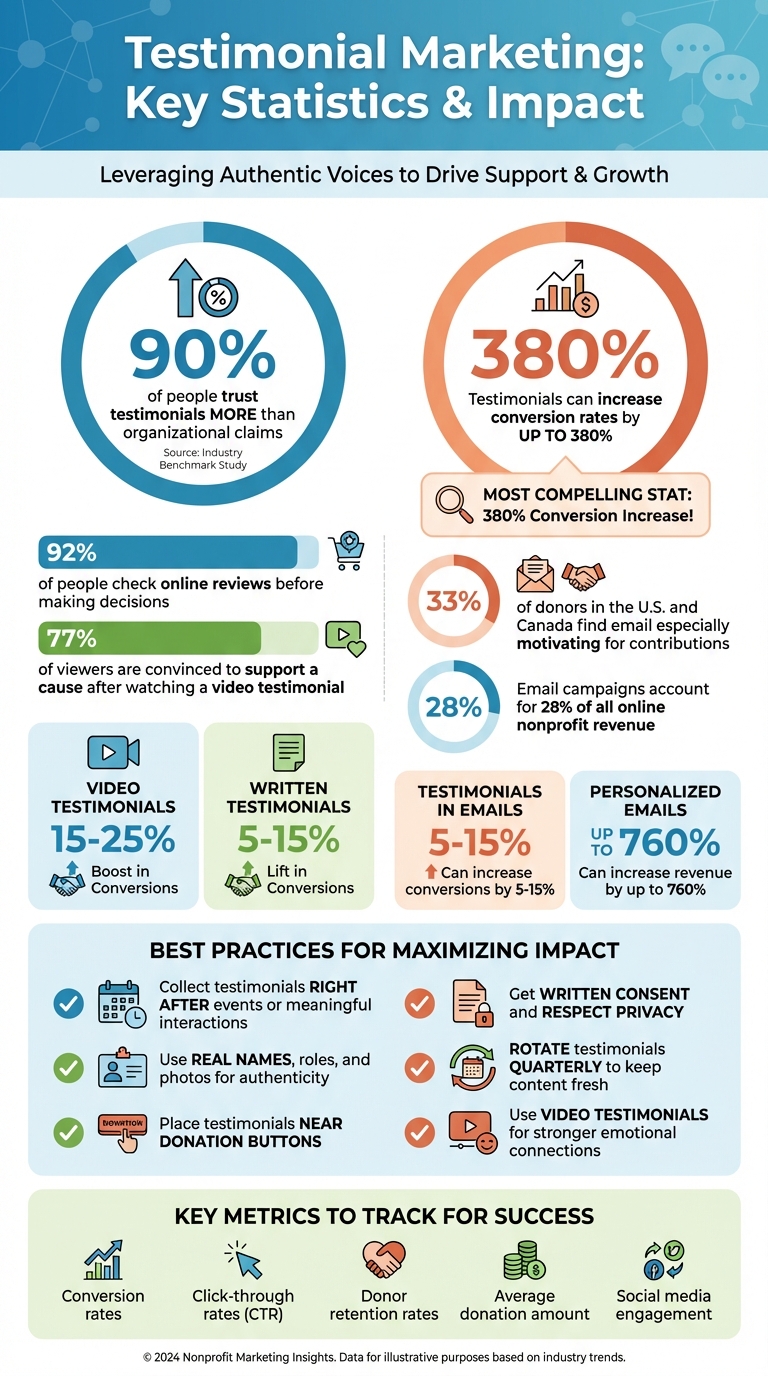
- Why Testimonials Work: 90% of people trust testimonials more than organizational claims, and they can increase conversion rates by up to 380%.
- How to Collect Testimonials: Use surveys, interviews, and social media outreach right after events or meaningful interactions. Always get written consent and respect privacy.
- Best Practices: Use specific, personal stories with real names and photos. Place testimonials strategically on websites, emails, and social media for maximum impact.
- Tools for Management: Track testimonials with spreadsheets or tools like EmbedReviews and organize them by themes for easy access.
- Measure Success: Monitor metrics like conversion rates, click-through rates, and donor retention to refine your strategy.
Actionable Tips:
- Add testimonials near donation buttons to encourage giving.
- Use video testimonials for stronger emotional connections.
- Regularly update testimonials to keep them relevant.
Want more support? Partnering with experts like Share Services can help nonprofits create impactful testimonial strategies tailored to their goals.
Testimonial Marketing Statistics and Best Practices for Nonprofits
Building a Testimonial Marketing Strategy
Aligning Testimonials with Fundraising Goals
To make the most of testimonials, they must tie directly to your fundraising goals. Start by defining your organization’s mission and vision - this creates the foundation for an effective strategy.
Set clear, measurable objectives. For example, you could aim to “collect 15 donor testimonials by March 31, 2026, to support the spring campaign targeting monthly givers.” This kind of specific goal helps your team stay focused and track progress.
Make sure your testimonials speak to the right audience. For instance, use donor testimonials in fundraising materials to build trust with potential contributors, while featuring beneficiary stories in outreach efforts to highlight the tangible results of your work. When you deliver the right message to the right audience at the right time, you increase both engagement and conversions.
Involve key stakeholders - board members, staff, volunteers, and beneficiaries - in setting these goals. This collaborative approach ensures your strategy addresses community needs while fostering widespread support.
Once your goals are set, focus on ethical and effective methods for gathering testimonials that align with your priorities.
Ethical Considerations for Testimonial Collection
Ethics should guide every step of your testimonial collection process. Start by obtaining explicit, written consent before collecting or sharing someone’s story, image, or personal details. This is especially critical when working with vulnerable individuals or minors - additional safeguards, like parental consent, are essential.
Respect privacy preferences. If a donor wishes to remain anonymous, honor their request. Be transparent about how personal information will be used and stored, and implement robust data security measures, such as encryption and role-based access controls, to protect sensitive information. Non-compliance with regulations like GDPR could result in penalties as high as €20 million or 4% of annual revenue.
Avoid exploitative narratives that focus on deficits or reinforce stereotypes. Instead, use strengths-based messaging that highlights individuals’ aspirations and achievements. Allow beneficiaries to tell their stories in their own words, ensuring their dignity is respected throughout the process.
Keep testimonials authentic and accurate. Avoid over-editing or offering incentives that might compromise their credibility. Always provide proper attributions for images and videos, and ensure your communications truthfully reflect your mission and the real impact of contributions.
Getting Expert Support for Strategy Development
Developing a testimonial strategy that truly works often requires a mix of storytelling expertise and digital marketing know-how. This is where specialized help can make all the difference. Share Services (https://shareservices.co) offers marketing and fundraising solutions specifically designed for nonprofits with revenues between $1 million and $20 million.
Their team helps organizations create comprehensive testimonial strategies that integrate seamlessly with broader branding and donor retention efforts. From digital fundraising planning and messaging development to digital marketing execution, their approach ensures that testimonials are woven throughout the donor journey - from first impressions to long-term engagement.
For mid-sized nonprofits, partnering with experts like Share Services can be a game-changer. They provide proven frameworks for collecting and using testimonials ethically and strategically, helping you align these efforts with your overall fundraising goals. This kind of support is especially valuable for organizations that need advanced marketing solutions but lack the resources for a large in-house team.
Collecting and Managing Testimonials
Best Channels for Testimonial Collection
The best time to gather testimonials is when supporters are at their most engaged - right after a successful event, a meaningful volunteer experience, or a significant donation. This is when their enthusiasm is fresh and their stories are most compelling.
Direct outreach is one of the most effective ways to collect testimonials. Reach out via phone or email, explain how their feedback will be used, and encourage them to share their experiences in their own words. Social media is another great resource - keep an eye out for positive posts and ask for permission to feature them.
Post-event surveys are another powerful tool. Send a short survey within 24–48 hours of an event to capture immediate impressions. Use 2–3 open-ended questions that invite storytelling rather than simple yes/no answers. For beneficiaries, consider scheduling one-on-one interviews in a relaxed setting. Be mindful of sensitive topics, avoid pressuring them, and always let them review the final version of their testimonial before publishing.
When done thoughtfully, testimonials can be a powerful way to connect with your audience and inspire action.
What Makes a Testimonial Effective?
The most impactful testimonials are specific and personal. Instead of vague statements like "This organization is wonderful", seek stories that provide details about what happened, how it made a difference, and why it mattered. For example, a donor saying, "After volunteering at the food distribution center in November 2024, I saw how my $500 donation provided meals for 75 families - it made my contribution feel real", is far more compelling than generic praise.
Authenticity is key. Use real names, roles, and photos whenever possible to show these are genuine people sharing their experiences. Avoid over-editing testimonials - it's okay to fix minor grammatical errors, but keep the speaker's natural voice and emotional tone intact. This personal touch is what makes testimonials resonate.
Tailor testimonials to your audience. For instance, use donor stories in fundraising campaigns to show financial impact, and share beneficiary experiences in awareness efforts to highlight the difference your organization makes.
Organizing these stories effectively ensures they’ll be ready to use whenever you need them.
Streamlining Testimonial Management
Managing testimonials efficiently is crucial for making them a consistent part of your marketing efforts. Start by keeping a detailed record of every testimonial, including its source, date, and consent status. Always have the speaker sign a release form to protect both your organization and the individual.
A simple tracking system - whether it’s a spreadsheet or a feature in your donor database - can make a big difference. Include columns for the speaker’s name, testimonial date, intended use, consent status, and whether they declined to participate. If someone opts out, note it immediately to avoid reaching out to them again and risking the relationship. Organize testimonials by themes like impact stories, volunteer experiences, or donor motivations, and by program area, so you can quickly find what you need for specific campaigns.
Consider using tools like EmbedReviews, Vocal Video, or Testimonial.to to automate the collection, organization, and display of testimonials. These tools can save time and make testimonials easily accessible to your marketing team.
Incorporate testimonial collection into your regular donor stewardship process rather than treating it as an occasional task. For example, when thanking a major donor, include a gentle request for a testimonial. After volunteer shifts, send a brief follow-up survey. Making it part of your routine ensures a steady flow of fresh stories without overburdening your team or supporters.
💡Nonprofit Visual Storytelling: Strategies for 360° Stewardship
sbb-itb-deea482
Using Testimonials Across Marketing Channels
Once you've gathered and organized your testimonials, the next step is using them effectively across different platforms to maximize engagement and support. Thoughtful placement of testimonials can transform casual visitors into dedicated donors or volunteers.
Website and Landing Pages
Your website is often the first stop for potential supporters deciding whether to trust your organization. Testimonials play a key role in building that trust by sharing real, impactful stories from those your work has touched. In fact, 92% of people check online reviews before making decisions.
To make the most of these testimonials, place the most compelling ones above the fold on your homepage - this ensures they’re seen immediately without scrolling, grabbing attention and establishing credibility.
Position testimonials strategically near donation buttons and sign-up forms. This placement can reassure visitors and reduce hesitation when they’re about to take action. For example, a testimonial next to a donation button can reinforce the impact of giving, making the decision feel more confident and meaningful.
For program-specific pages, include detailed testimonials or video stories that address common concerns. For instance, if you’re promoting a youth mentorship program, feature a parent’s story about how the program changed their child’s life. On donation pages, short testimonials about secure transactions or positive giving experiences can ease concerns and reduce abandonment.
Adding photos, videos, or audio clips to testimonials can make them even more persuasive. These elements feel more genuine and relatable. Video testimonials, in particular, are highly effective - 77% of viewers report being convinced to support a cause after watching one.
Email Marketing and Newsletters
Email remains a powerful tool for inspiring donations. In fact, 33% of donors in the U.S. and Canada find email especially motivating for their contributions. Incorporating testimonials into your email campaigns can increase conversions by 5–15% when done thoughtfully.
Start by including testimonials in your welcome series for new subscribers or donors. A heartfelt quote in the first email can immediately establish trust and show why your organization matters. For example, share a testimonial from a long-time donor explaining why they continue to support your mission.
Testimonials are also effective in impact updates. Share stories from beneficiaries to show donors the tangible results of their contributions. For lapsed donors, a testimonial highlighting the difference their past support made can rekindle their interest and inspire them to reengage.
Personalization is key - match testimonials to specific donor personas. For example, new donors might connect with stories about first-time giving, while major donors may appreciate testimonials that showcase long-term impact. Personalized emails can significantly boost engagement, with some studies showing a revenue increase of up to 760%.
Keep emails concise, even when adding testimonials. Campaign emails should be under 50 words, while newsletters can go up to 200 words. Always include a clear call to action, guiding recipients to donate, volunteer, or learn more.
Social Media and Video Content
Social media is an ideal space for quick, impactful testimonials that resonate with your audience. Since 9 out of 10 people trust recommendations from others, testimonials act as powerful social proof.
Video testimonials are especially effective on platforms like Instagram Reels, Facebook, and TikTok. Short clips - 30 to 60 seconds - featuring beneficiaries, volunteers, or donors sharing their experiences can create an emotional connection and inspire action. These videos are also highly shareable, helping your message reach more people.
For static posts, pull quotes from longer testimonials and pair them with striking images. For example, overlay a volunteer’s heartfelt words on a photo from a recent event to convey the spirit of your work.
Encourage supporters to share their own stories and tag your organization. User-generated content (UGC) not only adds authenticity but also expands your reach. With permission, repost these testimonials on your official channels to keep your content fresh and relatable.
To maintain engagement, consider themed testimonial series. For instance, dedicate a specific day each week to highlight a supporter’s story or run a "Volunteer Spotlight" series. Consistent themes make your content more engaging and help followers connect with your mission.
Use features like Instagram or Facebook Stories to rotate through multiple testimonials without cluttering your main feed. And don’t forget to include a clear call to action - encourage followers to donate, join an event, or share their own experiences.
Measuring and Improving Testimonial Performance
Tracking how your testimonials perform can transform them into powerful tools for fundraising. By monitoring key metrics and refining your approach, you can make these stories even more impactful across various platforms.
Key Metrics to Track
Once your testimonials are live, it’s important to measure how they’re influencing your audience. Start by focusing on metrics that show whether testimonials are driving meaningful actions. Conversion rates are a great place to begin - track the percentage of visitors who donate, sign up for newsletters, register for events, or commit to recurring giving after engaging with testimonials. Compare donation rates on pages with testimonials to those without. Research suggests that well-placed testimonials can increase conversion rates by up to 380%.
Click-through rates (CTR) are another critical metric, especially for email campaigns. For example, if an email includes a testimonial and a "Donate Now" link, CTR shows how many recipients clicked through. Since email campaigns account for about 28% of all online nonprofit revenue, measuring this is essential.
On social media, keep an eye on engagement metrics like shares, comments, and mentions on posts that feature testimonials. These interactions can reveal how well your audience connects with the stories. On your website, metrics such as time spent on pages with testimonials and bounce rates can help you understand their impact.
Donor retention rates can also provide valuable insights, especially if you’re using testimonials in reactivation campaigns. Compare retention rates between campaigns with testimonials and those without. Additionally, track the average donation amount to see if compelling testimonials inspire donors to give more generously.
"It's easy to come up with a list of 50 measures, but in practice, most nonprofits don't have time for side quests when it comes to measuring their impact. If everything is important, nothing is important".
Instead of overwhelming yourself with data, prioritize a few key metrics that align directly with your fundraising goals.
Testing and Iterating Testimonials
A/B testing can help you figure out what works best. Start small by testing one variable at a time. For instance, try placing the same testimonial in different spots on a donation page - like above the fold versus near the donation form - and compare the results.
You can also experiment with different formats. Video testimonials, for example, often deliver a 15–25% boost in conversions, while written testimonials typically provide a 5–15% lift.
Content variations matter, too. Does a testimonial from a program beneficiary resonate more than one from a donor? Does including specific outcomes, like how donations were used, encourage more contributions?
Run your tests long enough to gather reliable data, then analyze what’s driving success. If one video testimonial consistently outperforms others, dig into why. Is it the storytelling, the person featured, or the production quality? Use these insights to shape future testimonials and keep improving your campaigns.
Keeping Testimonials Relevant
Testimonials can lose their impact over time if they feel outdated. Make it a habit to review and refresh them regularly. Replace older stories with new ones that highlight your organization’s current programs and achievements. Align testimonials with seasonal campaigns to keep them relevant and engaging.
Rotating testimonials quarterly is a smart way to maintain their effectiveness. This approach not only keeps your content fresh but also helps you identify which types of testimonials work best in different contexts.
Keep an eye on your metrics and adjust as needed. If social media engagement starts to dip, try experimenting with a new format or featuring different voices. Similarly, if email open rates decline, consider testing new subject lines that better highlight the testimonial content. Treat testimonial marketing as an ongoing process, always looking for ways to refine and improve.
Conclusion: The Power of Testimonial Marketing
Testimonials shift the spotlight from self-promotion to authentic voices that resonate. When donors, volunteers, or beneficiaries share their real-life experiences, they create a level of trust that traditional marketing simply can't replicate. In fact, 90% of people trust peer testimonials more than claims made by organizations themselves. Beyond trust, testimonials build emotional bridges - when donors see their own values or aspirations reflected in someone else's story, they feel inspired to give, often more generously. This guide has shown how testimonials can be a powerful tool to demonstrate impact and encourage support.
Key Takeaways for Nonprofits
To make the most of testimonial marketing, start with a clear plan. Align the stories you collect with specific goals, such as increasing recurring donations, improving donor retention, or attracting new supporters. Focus on gathering testimonials that highlight real problems solved and tangible results achieved - these details make stories more relatable and impactful.
Ethical storytelling is essential. Always secure proper consent, respect privacy, and prioritize authenticity over perfection. A heartfelt, slightly imperfect testimonial can often feel more genuine than one that’s overly polished. Including details like real names (when permitted), roles, or photos adds credibility, while anonymous testimonials may appear less trustworthy.
Maximize your testimonials' reach by integrating them across multiple channels. Share them on your website, in email campaigns, on social media, and through video content. Test different formats and placements to see what resonates most with your audience. And don’t let content go stale - rotate testimonials every few months to keep them fresh and engaging.
How Share Services Can Help
If you’re looking to take your testimonial strategy to the next level, expert guidance can make all the difference. Share Services works with nonprofits earning $1M to $20M in revenue, offering tailored marketing strategies designed to deliver results. They address challenges like collecting ethical testimonials and integrating them effectively across platforms, helping you amplify your mission.
From strategic planning to creating compelling content, Share Services supports every step of the testimonial marketing process. Their offerings include brand and messaging development, digital marketing, advertising, and donor retention strategies. With their expertise, you can develop a thoughtful testimonial approach that strengthens donor engagement and drives contributions. Learn more at https://shareservices.co.
FAQs
How can nonprofits collect testimonials from beneficiaries ethically and responsibly?
To gather testimonials in an ethical manner, start by securing clear and voluntary consent. Explain the purpose of the testimonial, how it will be used, and ensure participants are fully aware of their rights - such as the ability to opt out or withdraw at any time. Use a written release form that outlines where the testimonial might appear (like your website, social media, or printed materials), and be upfront about any potential edits to keep the message genuine.
It's also important to protect participants' privacy and dignity. If someone requests anonymity, respect their wishes by removing identifiable details. Avoid including sensitive personal information, especially when dealing with topics like health or other private matters. When conducting interviews, use open-ended questions to let individuals share their stories naturally, rather than steering them toward specific responses. Before publishing, always give participants the chance to review and approve their testimonial.
Keep the process organized by maintaining detailed records of consent and securely storing the testimonials. This not only builds trust but also ensures accountability. Ethical testimonials can become powerful marketing tools for nonprofits, and working with professionals like Share Services can simplify the process while ensuring adherence to ethical guidelines.
What’s the best way to use testimonials in nonprofit fundraising campaigns?
To make the most of testimonials in fundraising, focus on sharing genuine, result-oriented stories that highlight the real difference your organization makes. Collect testimonials from a variety of voices - donors, volunteers, staff, and beneficiaries - and always ensure you have their permission to use names, photos, or videos. Short, specific examples, like “Your $50 donation helped 12 families stay warm this winter,” can leave a lasting impression and foster trust.
Use testimonials strategically at key moments, such as in emails, thank-you notes, campaign landing pages, and social media updates. Position them near calls-to-action or include video clips directly on donation forms to enhance engagement and drive conversions. For the greatest effect, structure these testimonials as stories: start with a challenge, explain how your nonprofit stepped in, and end with the results. Stories stick with people emotionally in ways that raw data simply can’t.
Experiment with different formats and placements to discover what resonates most with your audience. Track metrics like click-through rates, average donation amounts, and donor retention to fine-tune your strategy. When used thoughtfully, testimonials can deepen your relationship with donors and inspire even more support for your cause.
How can testimonials build trust and encourage donor engagement?
Testimonials are an excellent way to build trust and encourage donor involvement by providing social proof - genuine stories from those who have already supported your nonprofit. These real-life accounts make your organization feel more trustworthy and relatable, easing doubts and creating an emotional bond with potential donors. When people see others giving, it reassures them and increases their confidence in contributing as well.
Studies confirm that positive testimonials play a big role in boosting trust and donor interest. By highlighting the tangible impact of contributions, these stories help address common questions like, “Will my donation really make a difference?” This not only motivates people to get involved but also deepens their commitment over time.
Share Services assists nonprofits in gathering and sharing these meaningful stories through websites, email campaigns, and social media. By amplifying donor voices, they help transform curiosity into enduring support.
Related Blog Posts
Get helpful resources, straight to your inbox
We love sharing tools, ideas, and stories that make nonprofit work a little lighter and a lot more effective. Sign up below and we’ll send you practical tips, free resources, and a bit of encouragement—because the work you’re doing matters.
No spam. Just good stuff for good people.